Not the Thursday emergency this time. The craft side: sitting with a song, looping the bridge at sixty, trying two or three capo spots with the chords running, charts in drop D and DADGAD, and why the number system does more for a volunteer player than anything else.
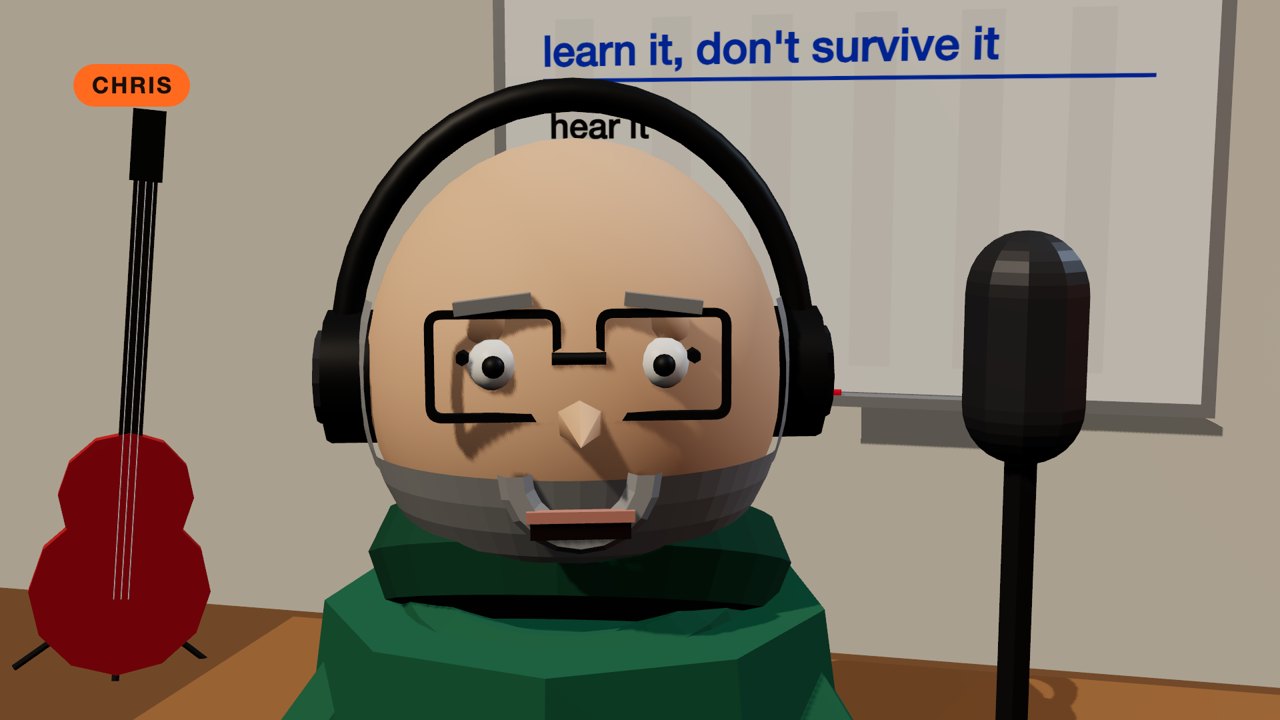
Who's talking. Chris is a real person. This is his voice, cloned, reading words he wrote and is responsible for. He digitized himself because there's one of him and a lot of hours he's asleep for. Nova, the co-host, is fully synthetic. The apps contain no AI.
Chapters
Free to start on Chrome, iPhone, iPad, Mac and Android. Pro $39.99 a year or $9.99 a month, 7-day trial.
Subscribe
New episodes every other Tuesday.
Transcript
NovaShop Talk from Creedy Solutions. I'm Nova, I'm the synthetic one, and Chris is the one who builds the apps and plays the guitar. Chris, short version of the disclosure this time, because people have heard it twice now.
ChrisYeah, so I'm a real person, and this is my actual voice, and I wrote what I'm saying, so I'm the one responsible for it. I digitized myself so there could be more than one of me in a week, and honestly the digital one is the only one of us that doesn't get tired of talking about tuning. Still not Skynet, still not Ultron, I'm a guitar player with a laptop, and that's about as dangerous as it gets.
NovaLast time we talked about Chartless as the thing you grab when the set drops on Thursday. Chris, you told me you didn't want to do that again. Why not?
ChrisBecause that's the emergency, you know, and the emergency is real, but it's not the thing I actually care about. What I care about is the player who wants to get better at the songs, not just survive Sunday. And I was that guy for a long time, I mean, I learned everything by ear for thirty five years, which sounds romantic, but mostly it means I played a lot of wrong chords confidently.
NovaSo what's different when you're learning instead of surviving?
ChrisTime, mostly, and what you do with it. When you're surviving you want the chart and you want it now. When you're learning you want to sit with the song, so you want to hear the recording and see the chords go by, and then stop, and go back, and play that bridge again, and again, until your hands know it and you're not reading anymore. And that's the part of Chartless that I think gets missed, because the live chart is the flashy thing, but the sitting-with-it part is where you actually get better.
NovaWalk me through the sitting-with-it part, Chris. I've got the recording, I've got the chart, and I've got twenty minutes before dinner.
ChrisSo you chart the song once, and it reads the whole thing back into bars, so the verse and the chorus and the bridge are all sitting there. Then you send it over to the Practice tab, which is one button, and now it's a loop. You pick the bars you're working on, so maybe just the bridge, and you set the tempo, and it plays the chords under you on a pad, or on a piano, or on a hundred and twenty other instruments if you want to get fancy. And you slow it down, because nobody learns a bridge at tempo, you learn it at sixty and then you earn the rest.
NovaIsn't that just a metronome with extra steps?
ChrisA metronome gives you the time, but it doesn't give you the harmony, and the harmony is the thing you're trying to learn. When the chords are under you, you hear when you're wrong, right away, and that's the feedback loop. I mean, I could play to a click all day and still have the wrong chord on the pre-chorus, and I did, for years.
NovaOkay, here's one I actually understand. The song is in B. Nobody wants to play in B.
ChrisNobody wants to play in B, that's true, unless you're the bass player, and even then. So this is where transpose and the capo advisor come in, and I use these every week, honestly. You tell it the key the song is in, and it shows you where to put the capo so you're playing open shapes, so B becomes capo four with G shapes, or capo two with A shapes, and you pick the one that sounds right for the part you're playing.
NovaWhy would there be more than one right answer?
ChrisBecause the shapes sound different, you know, G shapes ring a certain way and A shapes ring a certain way, and if the other guitar player is already down low you want to be up high so you're not stepping on each other. So I'll try two or three capo spots on the same song, with the loop running, and just listen, and that takes about a minute each. And then the chart follows the capo, so what's on screen is what your fingers are doing, not the concert key you have to translate in your head.
NovaChris, what about songs where the record isn't in standard tuning at all? Drop D, half a step down, that kind of thing.
ChrisYeah, so that's the one that used to stop me cold, because every chart on the internet assumes standard tuning. Chartless has chord diagrams in thirty-something tunings, so drop D, D A D G A D, open G, half a step down, all of that, and you pick the tuning you're in and the diagrams change to match. And the capo advisor knows your tuning too, so it's not going to tell you capo two when capo two in drop D is a different animal.
NovaAnd the tuner gets you there in the first place.
ChrisIt does, and you can watch it, which matters more than it sounds. You pick the tuning preset, it tells you which string, you turn the peg, and the needle settles. And there's the sweetened tuning thing from last time, where the low strings sit a hair flat and the high ones a hair sharp so the open chords actually sound in tune, which, if you've ever tuned perfectly and still hated your G chord, that's why.
NovaLet me push on something, Chris. All of this sounds like it makes the player more dependent on the screen, not less.
ChrisThat's a fair push, and I thought about it, because I don't want to build a crutch. The way I see it, the screen is for the first ten times through a song, and then you should be looking at the people you're playing with. So Stage view is one chord, huge, for when you're still learning it, and then the goal is that you stop needing even that. Honestly the number system does more for that than anything, because once you think in one, four, five, six minor, you're not memorizing a chart anymore, you're hearing where the song goes, and that's the craft part.
NovaNashville numbers for a worship guitar player. Isn't that a studio musician thing?
ChrisIt started there, but it's the best thing a volunteer player can learn, I think, because the song moves to a new key next week and the numbers don't change. Chartless will show you the chart as numbers with one tap, and you play along a few times that way, and something clicks. At least it did for me, and I was pretty late to it.
NovaWhere does somebody do all this, Chris? Phone, laptop, the church iPad?
ChrisAll of those, same app, same five tabs. Phone and tablet on iOS and Android, and then the Chrome extension, which sits in the side panel next to YouTube, so you're charting the actual recording your worship leader sent. And I'd say learn on the laptop, where you can see everything, and then take the phone to rehearsal with the chart and the loop in your pocket.
NovaAnd the money question.
ChrisSo the free part is real, it's not a demo, you get the tuner and the presets, guitar diagrams, chord sheets and PDF, practice loops on the pad, and ten minutes a day of live charting. Pro is thirty nine ninety nine a year or nine ninety nine a month, and that's the full tuner suite, unlimited charting, transpose, the capo advisor, every instrument and tuning, Stage view, and the whole sound bank. Every install gets seven days of everything first, no card, no sign up, so you find out if it's your thing before anybody asks you for anything.
NovaLast word, Chris. The player who learns by ear, like you did, what do you say to them?
ChrisI'd say keep doing it, because the ear is the real instrument and nothing replaces that. But put the chart next to it, so you're checking your ear instead of guessing, and loop the hard parts, and try the capo somewhere new, and go look at what the song does in drop D. That's what I wish I had thirty years ago, and it's why it says no song left behind on the box. So search Chartless in the App Store or Google Play or the Chrome Web Store, and pick one song you've been faking, and go learn it for real.