Most bands play to a click. Plenty of bands can't, and some players won't. DrumClock puts a phone by the kit, listens to the drummer, and sends MIDI clock and tap tempo to the keys rig, pedals and DAW. Chris answers the skeptic questions: how a phone pulls a tempo out of a live kit, what happens on a break, the stick count-off, the Sunday Keys tap-tempo problem, set-list presets, and what it gets wrong.
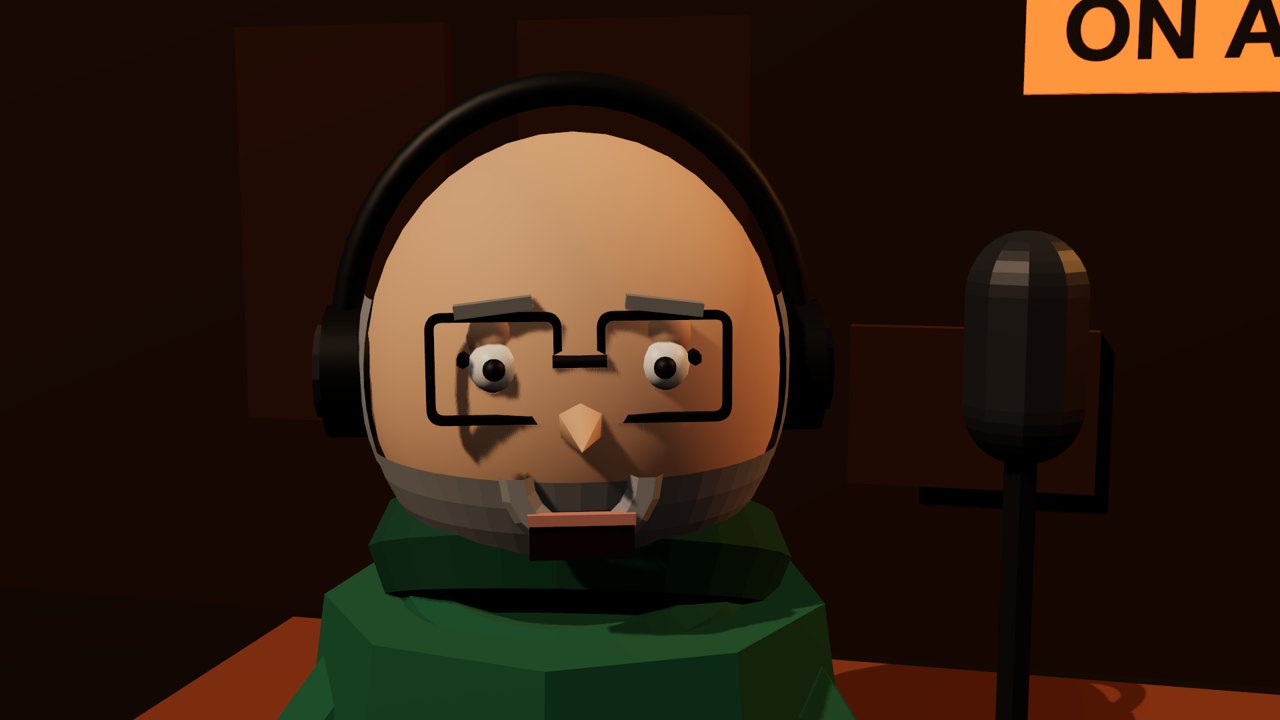
Who's talking. Chris is a real person. This is his voice, cloned, reading words he wrote and is responsible for. He digitized himself because there's one of him and a lot of hours he's asleep for. Nova, the co-host, is fully synthetic. The apps contain no AI.
Chapters
Free to try on iPhone, iPad and Android. Pro $19.99 a year or $49.99 once.
Subscribe
New episodes every other Tuesday.
Transcript
NovaThis is Shop Talk from Creedy Solutions, and I'm Nova. I should say up front that I'm a synthetic voice, and Chris, you should probably say something about yourself too, because I think people are going to wonder.
ChrisYeah, so, full disclosure, I'm a real person. This is my voice, I wrote what I'm saying, and I'm the one responsible for all of it, so if something in here is wrong, that's on me and not on the robot. But, uh, yes, I did digitize myself, because I've got a day job and a couple of apps and not a lot of hours, and it turns out the cloned version of me doesn't need coffee. And just to be clear, I'm not Skynet, I'm not Ultron, I'm not going to take over anything, I mean, I can barely take over my own calendar. It's just me, bald guy, hoodie, talking about drum apps, but now I can do it while I'm asleep. So Nova gets to be the skeptic, because I built these things and I'm obviously not going to be the skeptic about my own stuff, and you just ask me the things people actually ask.
NovaOkay. So today is DrumClock, and the tagline is "your drummer is the click." Chris, honestly that reads backwards to me, because the click is the thing the drummer follows.
ChrisYeah, that's a good point, and that's kind of the whole thing right there. So most bands these days play to a click, and the reason is usually the keys player, honestly, or the guitar player who's got a delay pedal, because those effects need a tempo to lock to. So what happens is the drummer puts in in-ear monitors and somebody runs a click and everybody lines up and it's great. But now go to a church with eighty people in it, or a bar band, or a school group, and there are no in-ear monitors, so there's no way to get a click to that drummer at all.
NovaSo what happens in that room today?
ChrisYou just kind of live with it, is what happens. The delay is at one tempo and the drummer is at another and it sort of washes out and nobody really says anything about it. Or, and I have done this plenty, you're stomping the tap tempo on your delay pedal in between parts, every song, with your foot, or if you're a keys player you're poking it with a finger between chords, and either way it's dumb, and it's been dumb for about twenty years.
NovaAnd what does DrumClock actually do about it?
ChrisSo you set a phone somewhere near the kit, and it listens to the drummer and sends that tempo out over MIDI, and that's really it. The drummer doesn't wear anything and the drummer honestly doesn't even know it's there. And whatever needs a tempo, you know, the keys rig or a pedal or Ableton, gets the drummer's actual tempo instead of a metronome.
NovaChris, a live drum kit is chaos, though. There are cymbals and toms and the bass amp bleeding in. How does a phone get anything usable out of that?
ChrisHonestly, that part took a while, and I'm not going to pretend it was obvious. The thing is that kick and snare have a particular shape, where there's a sharp hit and then a lot of low end on the kick, so I weight the detector toward that. It finds the pulse and locks a grid to it, and then it follows, and it doesn't jump, it kind of leans toward where the drummer is going. So hi-hat stuff doesn't throw it and a fill doesn't throw it, and if the drummer pushes the chorus a little, it goes with them.
NovaWhat about when the drummer stops? Say there's a four-bar break with just a pad.
ChrisSo it holds, it just keeps the last tempo until the drums come back in. The first version didn't do that, actually, it would hear the room and kind of wander off, and that got fixed in a rehearsal, basically, because somebody stopped playing and the delay went somewhere weird and everybody looked at me.
NovaAnd the start of a song, when there's nothing to follow yet?
ChrisRight, so that's the count-off. The drummer clicks the sticks three or four times, and that sets the tempo, and beat one lands right where they put it. So your delay is right on the first downbeat instead of three bars in after it's caught up, and I'm, uh, I'm pretty happy with that one, to be honest with you.
NovaLet me come at it from the other side. I'm a drummer, and I hate the click. Why do I want a phone grading my time all night?
ChrisWell, it's not grading anything, it's following you, which is a different thing. And to be honest with you, I think that might be the bigger audience, because the guys who hate the click don't hate tempo, they hate chasing something. With this, nobody's chasing anything, you play it how it feels and the band's effects just come along with you.
NovaOkay. Keys side, then. What's actually receiving this, Chris? Give me a real rig.
ChrisSo there are two outputs and you can run both of them at the same time. One is MIDI clock, which is the normal thing, twenty four pulses a beat with start and stop, and Ableton takes that, a Helix takes it, Strymon stuff, a synth arp, whatever has a clock input. And then the other one is tap tempo, where it sends a controller message on every beat, so it's like somebody's standing there tapping the tempo button for you.
NovaWhy would you want the tap version if clock already exists?
ChrisSunday Keys, mostly. That's the keys rig a ton of worship teams run on an iPad, and it does not take MIDI clock, but it does have a tap tempo you can MIDI Learn. Which means in practice somebody has to tap it every song, or you forget and the delay is sitting at the last song's tempo. So DrumClock taps it for you, and you MIDI Learn it once, there's a button in the app that sends four test taps, and then you're done with it.
NovaSame iPad, or a second device?
ChrisEither one, but there's a catch on the second one that people trip over. On the same iPad there's a virtual port called DrumClock and you just pick it, and that's easy. If it's a phone over by the kit, you can't plug an iPhone straight into another iPad and send it MIDI, that's just not a thing, so you need something in the middle. What I run is a Roland UM-ONE out of the phone, which is just a little USB to MIDI cable, into my pedals, and then MIDI thru from the pedals goes over to the keys player's audio interface, the Scarlett, which has a MIDI in. Or you skip the pedals and go straight into the Scarlett, same idea. Network and Bluetooth are in there too, and I put the latency warning right on the screen, because, you know, Bluetooth.
NovaWhat's the deal with presets?
ChrisSo that's set lists. You name a tempo for each song and drag them into order, and then you step through with a page turner pedal or whatever you've got, and when you tap the song the clock is already sitting there before the drummer plays anything. And then it treats that tempo as kind of a home base, so it follows the drummer inside a window around it, which means a stray hit or a double-time fill doesn't yank the whole thing somewhere silly.
NovaAlright, Chris. What does it get wrong?
ChrisPlacement matters more than I'd like it to, honestly. A phone sitting on a music stand next to a loud PA is a bad microphone, and in the cage is a good one, so that's on you a little bit. Brushes on a jazz kit, it wants more attack than that. And if you set it on the music stand next to the PA, it's going to decide the bass player is the drummer, and honestly, some nights he is. It's a stage tool, so if you're in a studio, you've already got a click and you don't really need me.
NovaPrice, platforms, and how people try it.
ChrisIt's on iPhone, iPad and Android, and it's free to try. Pro is nineteen ninety nine a year, or forty nine ninety nine once and you're done forever, which, for the record, is less than the cable you're going to buy to plug it in. And see reedy solutions dot com slash drumclock has a training video that's honestly longer than this episode, or you can just search DrumClock in the store.
NovaLast one, Chris. You're a Salesforce architect. Why is this the thing you built?
ChrisSo I've played electric guitar for about thirty five years, and I was a worship leader for a lot of years on top of that, and I've been the guy on stage with the wrong delay and no in-ear monitors and everybody just kind of shrugging about it, which, in a church, is about as close as you get to a complaint. And nobody is going to fix that for a church of eighty people, because it's not a market, so I figured I'd just do it. That's probably the whole answer. If you try it and something breaks, tell me, because I read all of it.
NovaThat's Shop Talk. Thanks, Chris. Links are in the notes, and I'm Nova, still synthetic.